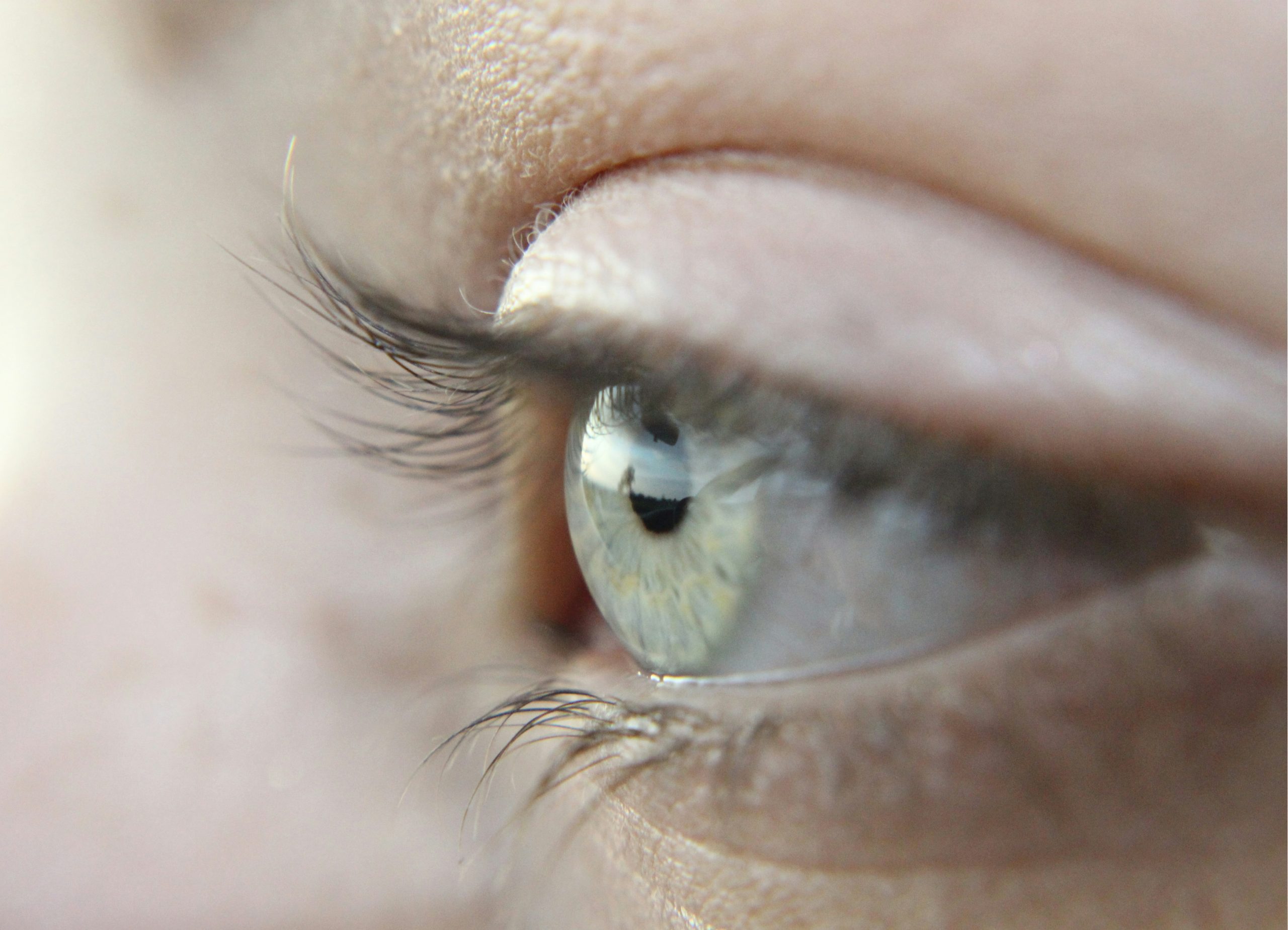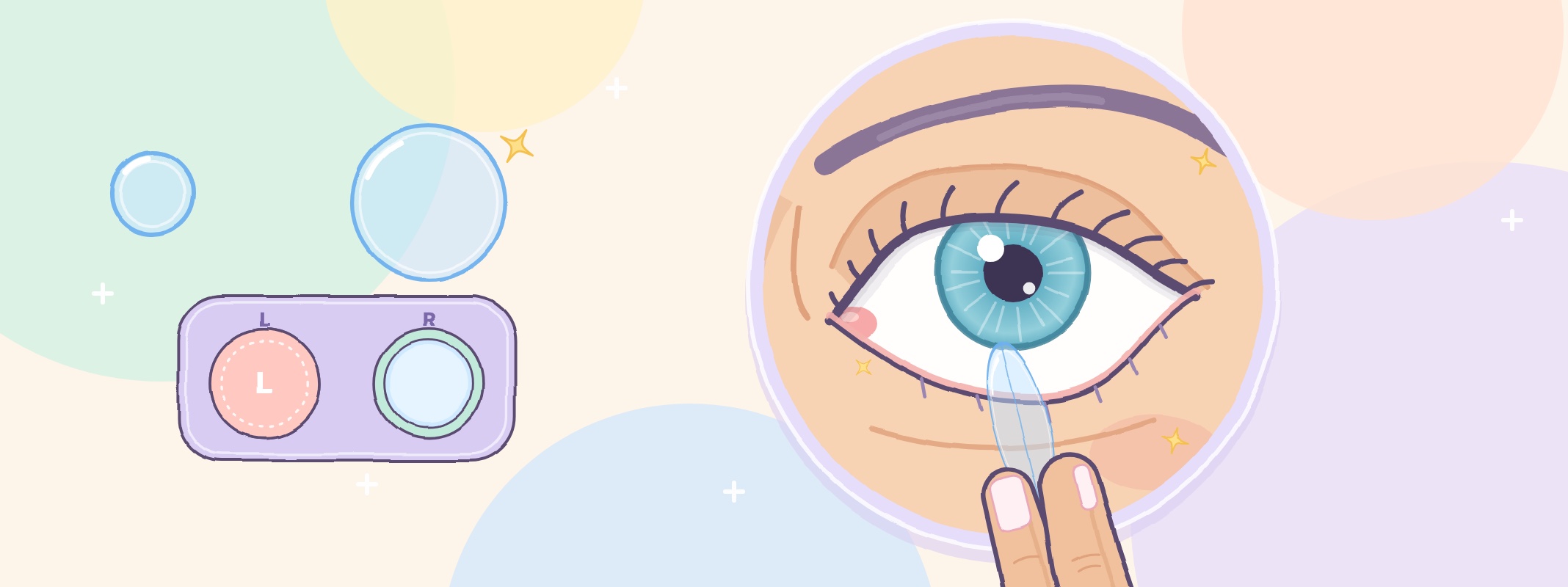









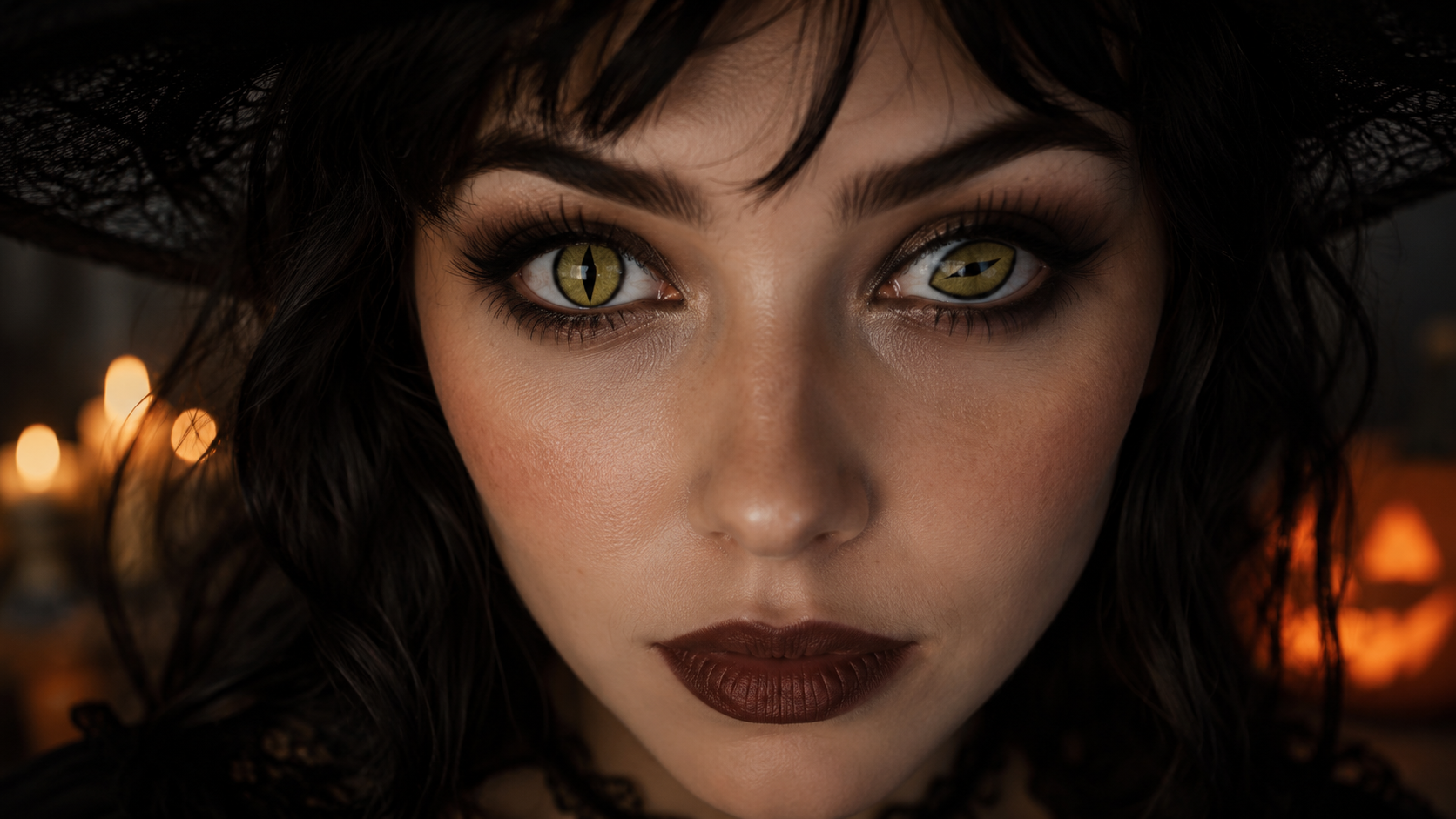
You put in your Halloween contacts, check the mirror, and everything looks perfect. A few blinks later, one cat-eye pupil is tilted sideways, and your carefully planned look suddenly seems a little confused.
Some movement is normal with soft contact lenses. They respond to your eyelids, tears, and eye movements throughout wear. With Special Effects Contacts, that movement can simply be much easier to spot since the printed design moves along with the lens.
Why Halloween Contacts Can Look Crooked After a Blink
Soft contact lenses don’t stay completely fixed to the eye’s surface. Your eyelids pass over them every time you blink, creating small forces that can shift or rotate the lens.
Eye care professionals actually expect some controlled movement from a properly fitted soft contact lens. The lens should generally stay centered and cover the cornea while still moving slightly with a blink.
Clear contacts can move in the same way. With Creepy Contact Lenses, a visible pattern makes every little turn much easier to notice.
Which Halloween Designs Reveal Rotation First?
Directional artwork tends to make rotation particularly obvious. Designs with a clear top, bottom, or vertical orientation make even a small turn easy to spot.
🎃 Halloween Lens Designs and Rotation
| Halloween lens design | What rotation can look like |
|---|---|
| Cat-eye pupils | The vertical slit starts leaning sideways |
| Reptile or snake eyes | The pupil or pattern appears tilted |
| Spirals | The design seems to turn around the iris |
| Spiderweb patterns | The web shifts from its expected position |
| Solid colors | Small rotations can be difficult to notice |
A cat-eye Sfx Contact Lens doesn’t necessarily move more than a solid red lens. It simply gives you a clear visual reference for spotting movement.
What Controls Where a Lens Settles?
How a Halloween lens behaves depends on both your eyes and the contact lens itself. Small differences in anatomy or lens design can change how quickly a contact lens recenters after blinking.
Your Eyes and Eyelids
Corneal shape, eyelid anatomy, your tear film, and the way you blink can influence where a soft lens settles. Your two eyes also aren’t perfectly identical, so one contact can appear steadier than the other.
That difference doesn’t automatically mean something is wrong. It simply means each lens is interacting with a slightly different eye surface and eyelid.
The Contact Lens
Lens characteristics can affect movement too. A lens’s shape and construction influence how it sits and moves across the eye.
Factors include:
- Diameter
- Base curve
- Material
- Thickness
- Overall design
Decorative contacts aren’t one-size-fits-all. The FDA states that an eye doctor should measure the eyes and evaluate how they respond to contact lens wear.
The same rule applies to Halloween Prescription Contacts. Vision correction doesn’t remove the need for a proper contact lens fitting.
Can You Fix a Rotating Halloween Contact Yourself?
Don’t try to force a Halloween contact to stay in position by repeatedly touching or pushing it around your eye. Frequent handling can also introduce contaminants from your fingers to the lens.
You also shouldn’t switch to a different diameter or base curve on your own just because a design keeps rotating. Those measurements are part of how a contact lens fits your eye.
If a lens repeatedly spins, slides, or loses its position, an eye care professional can check its fit. Some movement can still happen with a properly fitted soft lens, especially when the design makes rotation easy to see.
If you’re searching for Spirit Halloween Contact Lenses or similar costume lenses, remember that where you find a decorative design doesn’t change its medical-device status. The FDA requires decorative contact lenses to be prescribed just like corrective contacts.
When Shifting Becomes More Than a Costume Problem
A slightly crooked cat eye is mostly an appearance issue. Discomfort or changes in vision deserve more attention.
Remove your contacts and contact an eye care professional if you experience:
- Persistent redness
- Eye pain
- Significant irritation
- Discharge
- Reduced vision
The Centers for Disease Control and Prevention (CDC) recommends removing contact lenses and contacting an eye care provider when discomfort develops.
Don’t keep repositioning or wearing an uncomfortable lens just to keep your Halloween look going. Your costume can wait if your eyes are irritated or your vision changes.
A Little Movement Can Be Normal
Seeing your Sfx Contact Lenses move doesn’t automatically mean something is wrong. Soft lenses naturally respond to blinking, eyelids, tears, and the shape of your eyes.
The dramatic artwork on Halloween contacts simply makes that movement more noticeable. If a lens constantly rotates, slides out of place, affects your vision, or feels uncomfortable, have the fit checked rather than trying to keep the pattern straight yourself.
🎃 Frequently Asked Questions
Your eyes can differ slightly in corneal shape, eyelid position, tear film, and other characteristics. Those differences can cause the same type of lens to behave differently in each eye.
One lens might settle quickly after blinking while the other shifts a little more. Persistent movement in only one eye is worth discussing with your eye care professional if it affects comfort or vision.
Not necessarily at every moment. A soft cat-eye lens can rotate slightly as you blink, and the vertical pupil design makes that movement particularly noticeable.
A small tilt can therefore look dramatic even when the lens has only moved a little. Constant or excessive rotation, though, can be a reason to have the fit checked.
Not always. Excessive movement can be associated with a loose fit, but eye care professionals consider centration, corneal coverage, comfort, movement, and other factors when evaluating a lens.
Rotation by itself doesn’t tell you exactly how the lens fits. A professional fitting is the better way to determine whether the lens is appropriate for your eye.
Yes. In the United States, decorative contact lenses are prescription medical devices even when they don’t correct your eyesight.
That includes cosmetic, theatrical, and Halloween designs with zero corrective power. You still need a prescription and proper fitting before wearing them.
Occasional slight movement can happen with soft contacts. Remove the lenses and contact your eye care provider if movement is accompanied by discomfort, persistent redness, pain, or reduced vision.
You should also avoid repeatedly touching the lens to keep the design in place. If it continues to move excessively, have the fit checked instead.
References
- Resnick, Susan A., and Steven L. Sorkin. “Fitting Custom Soft Lenses.” Contact Lens Spectrum. May 1, 2024. Accessed August 21, 2026.
https://www.clspectrum.com/issues/2024/may/fitting-custom-soft-lenses/ - “Colored and Decorative Contact Lenses: A Prescription Is A Must.” U.S. Food and Drug Administration. Accessed August 21, 2026.
https://www.fda.gov/consumers/consumer-updates/colored-and-decorative-contact-lenses-prescription-must - “Decorative Contact Lenses for Halloween and More.” U.S. Food and Drug Administration. Accessed August 21, 2026.
https://www.fda.gov/medical-devices/contact-lenses/decorative-contact-lenses-halloween-and-more - “Preventing Eye Infections When Wearing Contacts.” Centers for Disease Control and Prevention. May 27, 2025. Accessed August 21, 2026.
https://www.cdc.gov/contact-lenses/prevention/index.html - “About Contact Lens Types.” Centers for Disease Control and Prevention. May 27, 2025. Accessed August 21, 2026.
https://www.cdc.gov/contact-lenses/about/about-contact-lens-types.html