








If you run out of contact lens solution, the only safe option is sterile saline labelled for contacts, and even then only to keep a lens moist for a short time. Nothing you have at home can clean and disinfect lenses the way solution does. Water, saliva, and homemade saltwater are never safe and can cause serious eye infections. The safest move is usually to throw away daily disposables and open a fresh pair, or wait for proper solution before wearing reusable lenses again.
Running out tends to happen at the worst moment, away from home or late at night. The fix is manageable as long as you avoid the risky shortcuts. Here is what is safe, what is not, and when to replace your lenses.
Why Does Contact Lens Solution Matter?
Solution does more than keep lenses wet. It cleans, disinfects, and protects your lenses so they are safe to put back on your eye.
Proper solution removes bacteria and debris, keeps lenses hydrated, and holds a pH balance that is safe for your eyes. Without it, lenses pick up contamination quickly, raising your risk of irritation, infection, and corneal damage. A liquid that only adds moisture does not disinfect, so it does not make a lens safe.
What Can You Put Contacts In Without Solution?
Nothing safely replaces contact lens solution. Your options depend on the lens type.
- Daily disposables. Throw them out and open a fresh pair when you are ready.
- Monthly or reusable lenses. Wait until you have proper solution before wearing them again.
A few emergency choices keep a lens moist for a short time, but none disinfect. Protecting your eyes matters more than saving one pair.
Can You Store Contacts in Saline in an Emergency?
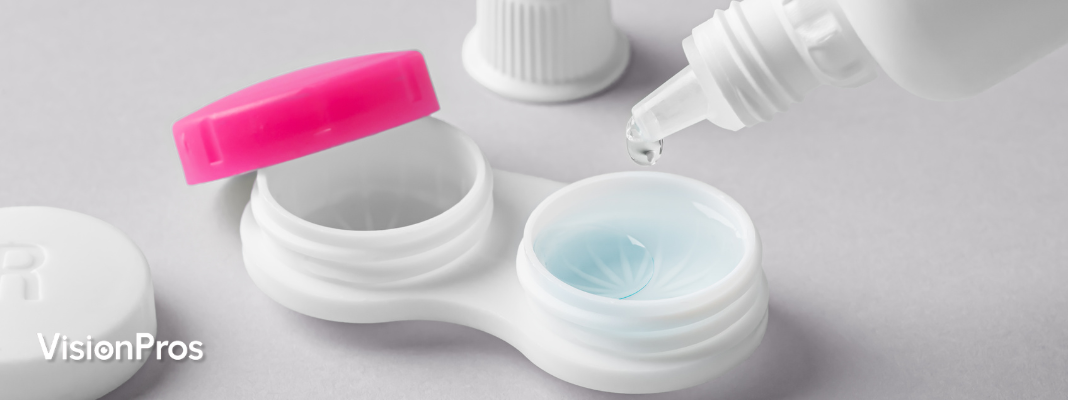
Sterile saline labelled for contact lenses is the least risky way to keep a reusable lens from drying out briefly. It only adds moisture, though. It does not disinfect.
A lens stored in saline still needs cleaning and disinfecting with proper solution before you wear it. If you have no sterile saline, discard the lens rather than store it in any other liquid.
Health authorities advise keeping all water away from contact lenses. Tap, bottled, distilled, lake, and well water can carry germs that lead to serious eye infections, so lenses that touch water should be disinfected or discarded.
What Should You Never Use Instead of Solution?
Never clean or store contacts in tap water, bottled water, distilled water, homemade saltwater, saliva, or eye drops. None of these disinfect, and several put dangerous microorganisms onto a lens that sits against your eye.
Water is the most dangerous mistake. Tap water, lake water, and well water can carry an ameba called Acanthamoeba, which causes a severe eye infection called Acanthamoeba keratitis. Health authorities note this infection is painful, hard to treat, and can need a year or more of care, with vision loss in the worst cases. Nearly 85 percent of Acanthamoeba cases occur in contact lens wearers, which is why every eye health authority warns against water contact with lenses.
| Liquid | Safe for Contacts? | Why |
|---|---|---|
| Contact Lens Solution | Yes | Cleans, disinfects, and stores lenses safely |
| Sterile Saline | Emergency only | Keeps lenses moist but does not disinfect |
| Tap Water | No | Can carry Acanthamoeba and other microorganisms |
| Bottled or Distilled Water | No | Not sterile and does not disinfect |
| Homemade Saltwater | No | No disinfecting power, contamination risk |
| Saliva | No | Full of bacteria, never safe for lenses |
| Eye Drops | No | Made to lubricate, not to clean or store lenses |
Can You Rehydrate Contacts That Dried Out?
No, not reliably. A fully dried-out lens can lose its shape, develop tiny cracks, and trap bacteria that stay even after you add solution.
When a lens has dried out completely, replace it. This is one reason daily disposables suit people who travel or forget supplies, since there is never a lens to rescue.
When Is It Safer To Replace Your Contacts?
Replace your lenses instead of risking a compromised pair if any of these apply.
- They were stored in water, saliva, or any non-solution liquid.
- They dried out completely.
- You cannot properly clean and disinfect them.
- They look cloudy, feel stiff, or smell unusual.
A new pair of lenses costs far less than treating an eye infection. When in doubt, start fresh.
Sterile saline is not a disinfectant. It only keeps a lens moist for a short time. Any lens stored in saline still needs cleaning and disinfecting with proper contact lens solution before you wear it.
When Should You See an Optometrist?
Take your contacts out and contact your optometrist if you notice redness, eye pain, blurry vision, light sensitivity, swelling, or discharge. These can be early signs of infection.
Caught early, these infections are far easier to treat. If symptoms appear after wearing a lens that was not properly disinfected, do not wait it out.
Frequently Asked Questions
Can I use water to store my contacts overnight?
No. Water does not disinfect and can carry Acanthamoeba and other microorganisms. A lens stored in water should be thrown away.
Is sterile saline the same as contact lens solution?
No. Saline only keeps a lens moist. It does not clean or disinfect, so lenses stored in saline still need proper solution before wearing.
Can I reuse daily disposables if I have no solution?
No. Daily disposables are made for single use and cannot be safely cleaned or stored. Throw them away and open a fresh pair.
What happens if I wear contacts that were not disinfected?
You raise your risk of irritation and infection, including serious ones like Acanthamoeba keratitis. If a lens has not been disinfected, do not put it in your eye.
How can I avoid running out of solution again?
Keep a travel-size bottle in your bag, store a backup at home or work, and replace your solution before it runs out. Daily disposables help if you forget supplies regularly.
If you forget your solution regularly, daily disposables remove the storage problem since you start fresh each day. Daily options like 1-DAY ACUVUE MOIST, DAILIES Total1, and Precision1 never need cleaning or storing. If you need to restock, Vision Pros Canada carries contact lens solution alongside a full range of lenses, including monthly options like Biofinity and AIR OPTIX, so you can replace both in one place.
References
Centers for Disease Control and Prevention. Healthy Habits Keeping Water Away from Contact Lenses. CDC.gov. 2025.
Canadian Association of Optometrists. Contact Lens Care and Safety. CAO.ca. 2023.
American Academy of Ophthalmology. Contact Lens Care. AAO.org. 2023.
Health Canada. Medical Devices and Contact Lenses. Canada.ca. 2023.