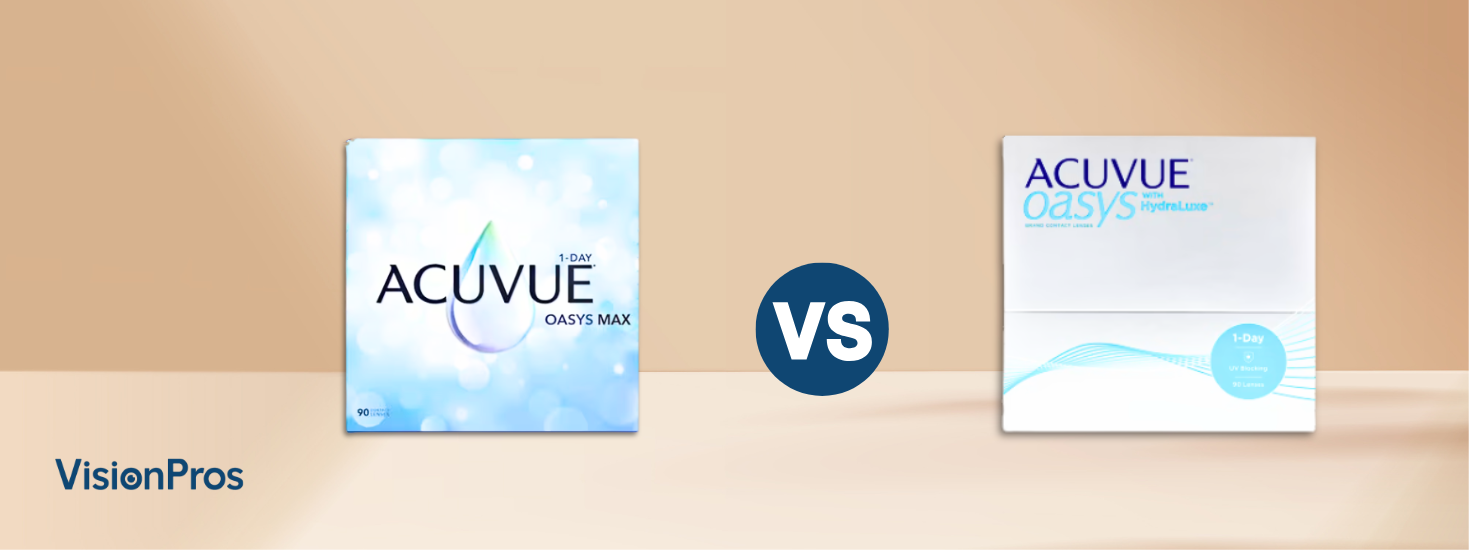








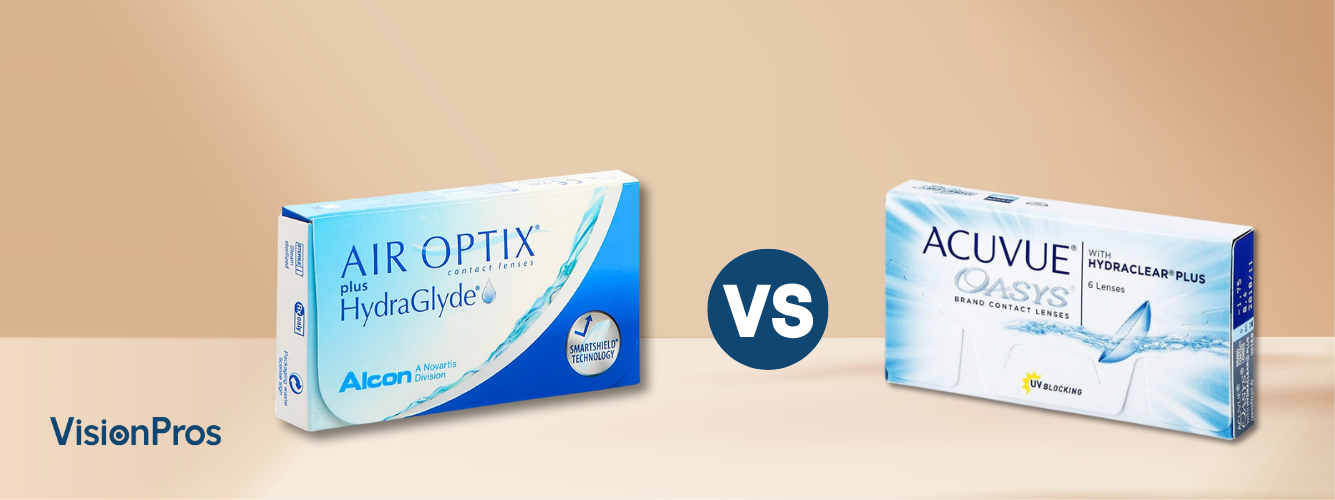
Air Optix (Alcon) and Acuvue Oasys (Johnson & Johnson) are both leading brands of reusable contact lenses, primarily focused on comfortable wear and high oxygen flow. Both lines utilize silicone hydrogel materials, an advanced polymer that significantly increases the amount of oxygen reaching the cornea compared to traditional hydrogel lenses. While both brands aim to support all-day comfort, they achieve this through different materials, replacement schedules, and unique surface technologies. Reviewing these distinctions is necessary for selecting the correct lens.
Material Science and Oxygen Transmissibility
The physical composition of the lens dictates its performance, specifically its oxygen flow (Dk/t) and its water content. The two brands use chemically distinct silicone hydrogel materials.
- Air Optix (Lotrafilcon B) – This material is characterized by lower overall water content but exceptionally high oxygen permeability. This combination minimizes water evaporation from the lens surface during wear, which directly reduces the sensation of dryness over long periods. The Lotrafilcon B composition is optimized for extended wear cycles, supporting its monthly replacement schedule.
- Acuvue Oasys (Senofilcon A) – This material features higher water content and moderate oxygen permeability. The higher water content contributes to a soft, smooth lens feel when inserted. The Senofilcon A material is primarily engineered for bi-weekly wear, though it is also available in a daily disposable modality.
Surface and Hydration Technologies
Because both lenses are reusable, managing surface deposits and maintaining constant moisture are key. Each brand employs proprietary technology to accomplish these tasks.
- Air Optix (SmartShield & HydraGlyde) – The Air Optix line features SmartShield Technology, which creates a permanent, ultra-thin protective layer around the lens. This technology helps reduce the buildup of mineral deposits and lipids over the 30-day wearing cycle. Select products, such as Air Optix plus HydraGlyde, further incorporate the HydraGlyde Moisture Matrix. This matrix surrounds the lens in a persistent, hydrating cushion that assists in retaining moisture throughout the day.
- Acuvue Oasys (HYDRACLEAR PLUS) – Acuvue Oasys lenses use HYDRACLEAR PLUS Technology. This process embeds a wetting agent directly into the Senofilcon A material. This design aims to mimic the properties of the natural tear film, helping the eye stay lubricated and comfortable. Additionally, Acuvue Oasys lenses include UV protection that blocks over 90% of UVA and 99% of UVB rays.
Comparison Overview
| Feature | Air Optix (Alcon) | Acuvue Oasys (J&J) |
|---|---|---|
| Replacement Schedule | Monthly (Extended Wear Options) | Bi-Weekly (Daily Options Available) |
| Material Name | Lotrafilcon B | Senofilcon A |
| Surface Technology | SmartShield & HydraGlyde | HYDRACLEAR PLUS |
| Max Continuous Wear | Up to 30 continuous nights (NIGHT & DAY AQUA) | Up to 6 continuous nights (Oasys only) |
| UV Protection | No | Yes (Class 1 or 2) |
Modality and Approved Wear Schedules
The difference in material composition supports varying replacement and wear schedules. Air Optix concentrates primarily on the longer wear cycle.
Air Optix lenses are generally replaced once per month. Specific products, such as Air Optix NIGHT & DAY AQUA, are approved for continuous extended wear, allowing the lens to be worn for up to 30 consecutive nights. This option is reserved for patients whose eye health allows for overnight wear and must be prescribed by an eye care professional. Other lenses in the line are meant for daily wear and nightly removal for 30 days.
Acuvue Oasys lenses are typically worn for a bi-weekly cycle, requiring replacement every 14 days. These lenses are also approved for up to six consecutive nights of extended wear under professional guidance. Acuvue Oasys also offers products in a daily disposable modality, providing the convenience of a fresh lens daily while retaining the brand’s HYDRACLEAR PLUS technology.
Specialized Vision Corrections
Both manufacturers produce highly stable lenses for complex vision corrections, including astigmatism and presbyopia. These specialized designs are crucial for ensuring the lens remains centred and aligned on the eye, regardless of the unique visual demand.
For Astigmatism:
- Air Optix for Astigmatism – These lenses rely on the stability of the Lotrafilcon B material and proprietary features to maintain clear vision throughout the month-long wear cycle.
- Acuvue Oasys for Astigmatism – ACUVUE utilizes its proprietary Accelerated Stabilization Design (ASD) technology, where four stabilization zones work with the natural blink to quickly re-centre the lens, keeping vision stable during movement.
For Presbyopia (Multifocal):
- Air Optix plus HydraGlyde Multifocal – This lens uses Alcon’s Precision Profile Design to smoothly blend various prescription strengths, achieving clear vision at distance, intermediate, and near.
- ACUVUE OASYS Multifocal – This lens uses Pupil Optimized Design, tailoring the optical design based on the patient’s age and refractive error to provide crisp vision across all distances.
Next Steps for Lens Selection
The decision between Air Optix and Acuvue Oasys depends entirely on individual clinical requirements and patient preferences. The choice hinges on whether the patient prioritizes a longer replacement cycle, the UV-blocking capabilities of Acuvue Oasys, or approval for 30-day continuous wear. Each patient will have a unique preference for material feel, hydration method, and fit characteristics.
Note, no patient should start or switch contact lens brands without professional guidance. To find the lens that offers the best blend of comfort and clarity, a thorough fitting exam with your eye care professional is necessary. An optometrist will confirm the lens material and design are appropriate for your eye’s surface and curvature, ensuring safety and optimal vision performance.