





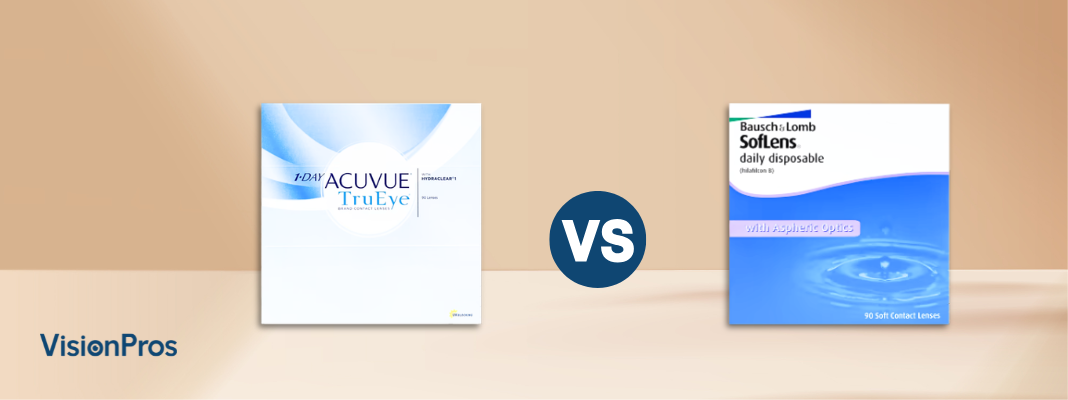
Selecting the right daily disposable contact lens is a decision that impacts both your visual clarity and your long-term ocular health. Two long-standing options in the Canadian market are 1-DAY ACUVUE TruEye by Johnson & Johnson and SofLens Daily Disposables by Bausch + Lomb. While both are designed for single-use convenience, they represent two different generations of contact lens technology. Understanding the material science, oxygen permeability, and optical designs of these lenses is necessary for determining which brand aligns with your physiological needs and lifestyle.
As of 2026, it is important for Canadian wearers to note that while 1-DAY ACUVUE TruEye was a pioneer in silicone hydrogel technology, the brand has largely been phased out in favour of newer innovations such as Acuvue Oasys 1-Day. However, many patients still seek comparisons to understand how their legacy lenses stack up against reliable hydrogel options like SofLens.
Material Science: Silicone Hydrogel vs. Hydrogel
The most significant technical difference between these two lenses lies in their base material. Your cornea does not have a blood supply and must receive its oxygen directly from the atmosphere. The material of your lens determines how much of that oxygen actually reaches your eye.
- 1-DAY ACUVUE TruEye (Narafilcon A) – This lens is manufactured using a silicone hydrogel material. Silicone is inherently permeable to oxygen, allowing significantly more airflow to the cornea than traditional plastics. TruEye was the first daily disposable to offer the breathability of a monthly lens, supporting whiter, healthier-looking eyes even after long hours of wear.
- SofLens Daily Disposables (Hilafilcon B) – This lens is made from a traditional hydrogel material. Hydrogel lenses rely on their water content to transport oxygen. While they are incredibly soft and comfortable upon insertion, they have a lower oxygen transmissibility (Dk/t) compared to silicone hydrogel options. SofLens remains a popular choice for those with sensitive eyes who prefer the gentle feel of a high-water hydrogel.
Advanced Comfort and Moisture Technologies
Both Johnson & Johnson and Bausch + Lomb have integrated proprietary technologies into these lenses to combat the dryness often associated with contact lens wear in the dry Canadian climate.
HYDRACLEAR 1 Technology (TruEye) The TruEye lens features HYDRACLEAR 1 Technology, which permanently embeds a high volume of a moisture-rich wetting agent (PVP) into the lens material. This creates a super-smooth surface that mimics the natural mucin layer of the tear film. This technology reduces friction between the eyelid and the lens, which is a primary cause of end-of-day eye fatigue.
ComfortMoist Technology (SofLens) SofLens utilizes ComfortMoist Technology, which involves a combination of a remarkably thin lens design and a slow-release packaging solution. The lens sits in a nutrient-rich solution in the blister pack that cushions the eye upon insertion. The ultra-thin profile of the Hilafilcon B material provides a “no-lens” sensation that is highly valued by beginners and occasional wearers.
Optical Design and Visual Performance
Beyond comfort, the way a lens handles light refraction is critical for visual acuity, especially in challenging environments.
- High Definition Optics (SofLens) – One of the standout features of the SofLens Daily Disposable is its aspheric optical design. This technology is engineered to reduce spherical aberration, which is the inability of a lens to focus light perfectly on a single point. By reducing this distortion, SofLens provides crisp, clear vision even in low-light conditions, such as driving at night or working in dimly lit offices.
- Stable Vision (TruEye) – The TruEye lens provides a dependable spherical correction that is effective for standard nearsightedness and farsightedness. While it lacks the specific aspheric focus of the SofLens, its high-stability material ensures the lens stays centred on the eye for consistent vision throughout the day.
Technical Performance Comparison Table
The following table provides a direct comparison of the technical specifications for 1-DAY ACUVUE TruEye and SofLens Daily Disposables:
| Technical Feature | 1-DAY ACUVUE TruEye | SofLens Daily Disposables |
|---|---|---|
| Material Type | Silicone Hydrogel (Narafilcon A) | Hydrogel (Hilafilcon B) |
| Oxygen Transmissibility (Dk/t) | 118 | 22 |
| Water Content | 46% | 59% |
| UV Protection | Class 1 (Highest Blocking) | None |
| Optical Design | Spherical | High Definition Aspheric |
| Visibility Tint | Yes (1-2-3 Mark) | Yes |
UV Protection and Outdoor Use
One area where 1-DAY ACUVUE TruEye clearly outperforms SofLens Daily Disposables is in ocular UV protection. The TruEye lens provides Class 1 UV blocking, which filters out more than ninety percent of UVA and nearly ninety-nine percent of UVB rays. This is an essential feature for Canadians who enjoy outdoor activities such as skiing or hiking, where sunlight reflections can be intense.
SofLens Daily Disposables do not include built-in UV protection. While this does not impact visual quality, it means that wearers must be diligent about wearing high-quality sunglasses to protect their eyes from long-term sun damage. If UV protection is a primary requirement for you, the Acuvue brand family remains the industry standard.
Making the Final Choice
The decision between these two lenses often comes down to your individual eye chemistry and daily environment.
Choose 1-DAY ACUVUE TruEye (or its modern equivalent) if:
- You wear your lenses for more than twelve hours a day and need maximum oxygen flow.
- You spend a significant amount of time outdoors and value integrated UV protection.
- You want a silicone hydrogel material that supports long-term eye health and redness reduction.
Choose SofLens Daily Disposables if:
- You prioritize affordability without sacrificing crisp, clear vision.
- You find traditional hydrogel lenses to be softer and more comfortable for sensitive eyes.
- You struggle with glare or halos in low-light environments and want the benefit of High Definition Optics.
Next Steps for Your Vision
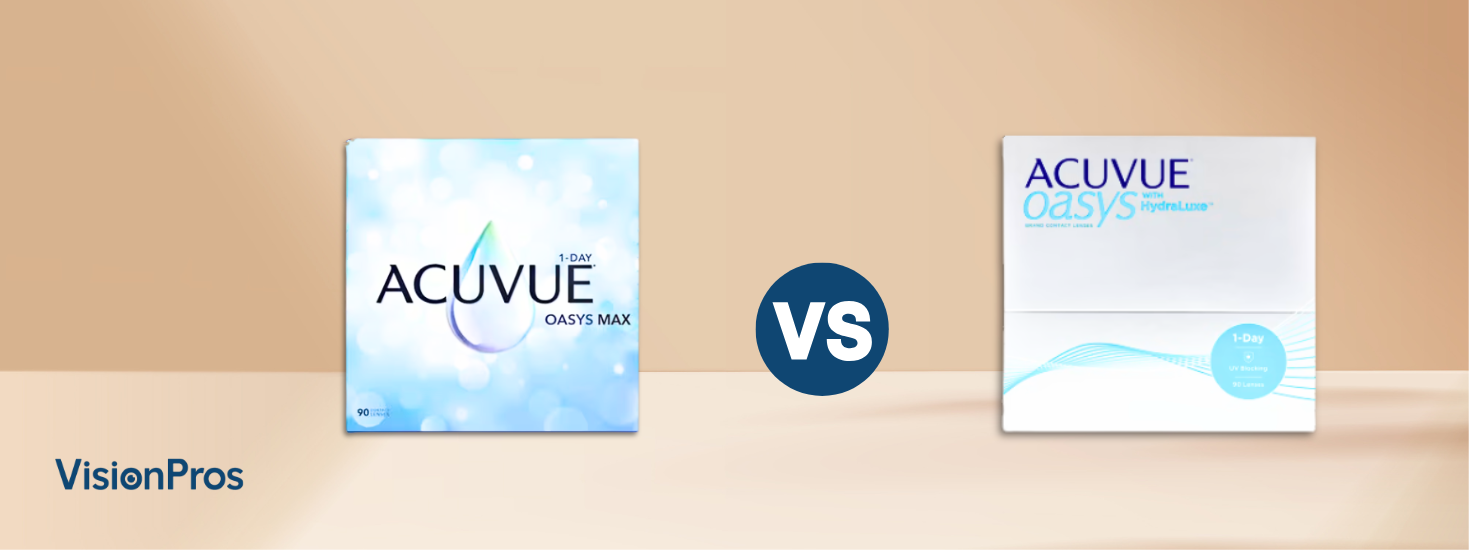
Because 1-DAY ACUVUE TruEye has been largely discontinued, it is mandatory to consult with your optometrist if you are considering a switch. They may recommend transitioning to Acuvue Oasys Max 1-Day or Acuvue Oasys 1-Day with HydraLuxe, which provide even higher levels of comfort and performance than the original TruEye. If you prefer to stay with a reliable hydrogel option, SofLens Daily Disposables remain a cost-effective and clinically proven choice.
Once you have an updated prescription from your eye care professional, you can find the best selection of daily disposables at VisionPros Canada. Always ensure you are following a strict daily replacement schedule to maintain the hygiene and safety of your eyes.
References
Johnson & Johnson Vision. 1-DAY ACUVUE TruEye Brand Product Specifications (acuvue.ca/products/1-day-acuvue-trueye). 2026.
Bausch + Lomb. SofLens Daily Disposables with High Definition Optics (bausch.ca/products/contact-lenses/daily-disposable-contact-lenses/soflens-daily-disposables). 2026.
American Academy of Ophthalmology. Silicone Hydrogel vs. Hydrogel Lenses (aao.org/eye-health/tips-prevention/contact-lens-materials). 2025.
Canadian Association of Optometrists. Contact Lens Materials and Eye Health (opto.ca/eye-health-library/contact-lens-materials). 2025.
Lenspricer. 1-Day Acuvue TruEye Discontinued – Alternatives and Switching Guide (lenspricer.com/news/1-day-acuvue-trueye-discontinued). 2024.